

Why Turquoise and White Bedroom Design Is So Popular Nowadays?
A turquoise and white bedroom design brings together freshness, comfort, and modern elegance.
Turquoise is a peaceful cool color inspired by clear skies and tropical water, while white creates a clean, open, and bright foundation.
When these two colors are combined, they can make a bedroom feel spacious, relaxing, and beautifully organized.
This is why the turquoise and white color combination is one of the most popular and fashionable bedroom trends nowadays.
Unlike heavy or extremely dark color schemes, turquoise and white feel gentle and visually refreshing.
The combination is usually comfortable for the eyes because white reflects light throughout the room, while turquoise introduces color without making the interior feel overly intense.
Softer shades such as aqua, seafoam, and pale turquoise can create a quiet and restful atmosphere.
Meanwhile, deeper turquoise can be used on an accent wall, headboard, rug, curtains, or furniture to give the bedroom more character.
In this article, we are describing 10 turquoise and white bedroom design ideas that can help you create a balanced and attractive interior.
These ideas cover every major part of the bedroom, including selecting the perfect shades, creating an accent wall, choosing the right bed, styling the bedding, selecting curtains, adding gold accents, arranging furniture, improving lighting, choosing rugs and accessories, and decorating with plants and artwork.
Each section will show how a different design element contributes to the complete appearance of the room.
The Best Weather for a Turquoise and White Bedroom Design
A turquoise and white bedroom design is especially suitable for summer and spring.
During hot weather, this cool color palette can make a bedroom look fresher, lighter, and more comfortable.
White surfaces reflect natural daylight, while turquoise creates a cooling visual effect that reminds us of the sea, open skies, and refreshing water.
This makes the combination particularly suitable for warm regions and rooms that receive plenty of sunlight.
However, turquoise and white are not limited to summer.
The design can remain beautiful throughout the year by changing its textures and accessories.
During winter, soft rugs, velvet cushions, layered blankets, warm lighting, and small gold or natural-wood accents can add warmth to the cool palette.
In autumn, cream-colored fabrics and woven accessories can create a softer and more comfortable atmosphere.
Whether your bedroom is modern, luxurious, coastal, minimalist, or traditional, these turquoise and white bedroom ideas can be adapted to suit its size and style.
The following ten ideas will help you use this fashionable color combination thoughtfully, creating a bedroom that feels cool, peaceful, elegant, and pleasing to the eyes.

Choosing the Perfect Colors for a Turquoise and White Bedroom Design
Choosing the right shades creates the foundation for a beautiful Turquoise and White Bedroom Design.
The featured bedroom shows how several related tones can work together without making the room feel busy.
Instead, the color scheme feels light, peaceful, and naturally elegant.
The upholstered bed introduces a medium turquoise shade, which becomes the room’s strongest color feature.
Meanwhile, crisp white bedding keeps the sleeping area fresh and visually comfortable.
A pale aqua quilt and matching bench soften the contrast between turquoise and white.
Therefore, the complete palette feels layered rather than divided into two solid colors.
Begin With a Clean White Foundation
White works best as the dominant color because it reflects light and makes the bedroom appear larger.
In this room, warm white walls create a softer appearance than brilliant, cool white paint.
As a result, the space feels welcoming instead of cold or clinical.
The white duvet, pillows, curtains, rug, and seating repeat this light foundation throughout the room.
However, each white surface has a slightly different texture or undertone.
These small variations add depth while maintaining a calm and coordinated appearance.
When selecting white paint, examine it beside your furniture, flooring, and natural daylight.
Some whites contain grey undertones, while others lean toward cream, beige, or blue.
For this particular style, a warm or neutral white usually complements turquoise more naturally.
Additionally, test every paint sample during morning, afternoon, and evening.
Natural light changes color throughout the day, so one shade may appear different after sunset.
A large sample board provides a clearer result than a small paint card.
Choose Turquoise Shades With the Right Depth
Turquoise can appear bright, muted, blue, green, or slightly grey.
Therefore, selecting one main shade helps prevent an unplanned mixture of competing colors.
The featured bedroom uses a medium, slightly muted turquoise on the upholstered bed.
This choice provides character without overwhelming the peaceful setting.
Lighter turquoise appears on the quilt, bench, cushions, and decorative objects.
Meanwhile, deeper tones appear within the artwork and patterned lumbar pillow.
This gradual movement from pale aqua to richer turquoise creates a professional, balanced finish.
For a smaller bedroom, use pale turquoise on fabrics and accessories.
Lighter shades preserve brightness and help limited spaces feel more open.
Conversely, a larger bedroom can support a deeper turquoise bed, wall, dresser, or pair of curtains.
You should also consider the room’s direction and available sunlight.
A sunny bedroom can comfortably carry stronger turquoise shades.
However, a darker room often benefits from softer aqua tones and generous white surfaces.
Balance Color Through Furniture and Textiles
The natural wooden nightstands prevent the cool palette from feeling flat.
Their warm grain creates a gentle connection between the bedroom and the outdoor greenery.
Likewise, the ivory rug adds softness without competing with the turquoise furniture.
Rather than repeating one exact shade everywhere, the room uses several closely related tones.
The artwork, cushions, throw, ceramic pieces, and fabric samples all belong to the same color family.
Consequently, the scheme feels coordinated but still interesting.
A useful approach involves choosing one dominant neutral, one main turquoise, and two lighter supporting shades.
For example, combine warm white with medium turquoise, pale aqua, and soft seafoam.
Then, introduce limited wood, greenery, or matte black for definition.
Pattern should remain controlled because color already provides visual interest.
One patterned cushion and one abstract artwork are enough for this room.
Meanwhile, solid bedding and simple curtains give the eyes comfortable areas to rest.
Create a Calm and Lasting Color Scheme
Before buying furniture, collect paint cards, fabric swatches, flooring samples, and curtain materials together.
Viewing every finish in one place reveals whether the undertones truly complement each other.
Moreover, this simple step can prevent costly decorating mistakes.
The image demonstrates that a successful Turquoise and White Bedroom Design depends on proportion, undertones, and thoughtful repetition.
White should provide breathing space, while turquoise should guide attention toward selected features.
Finally, natural wood and greenery can soften the cool palette and make the bedroom feel complete.
Creating an Accent Wall in a Turquoise and White Bedroom Design
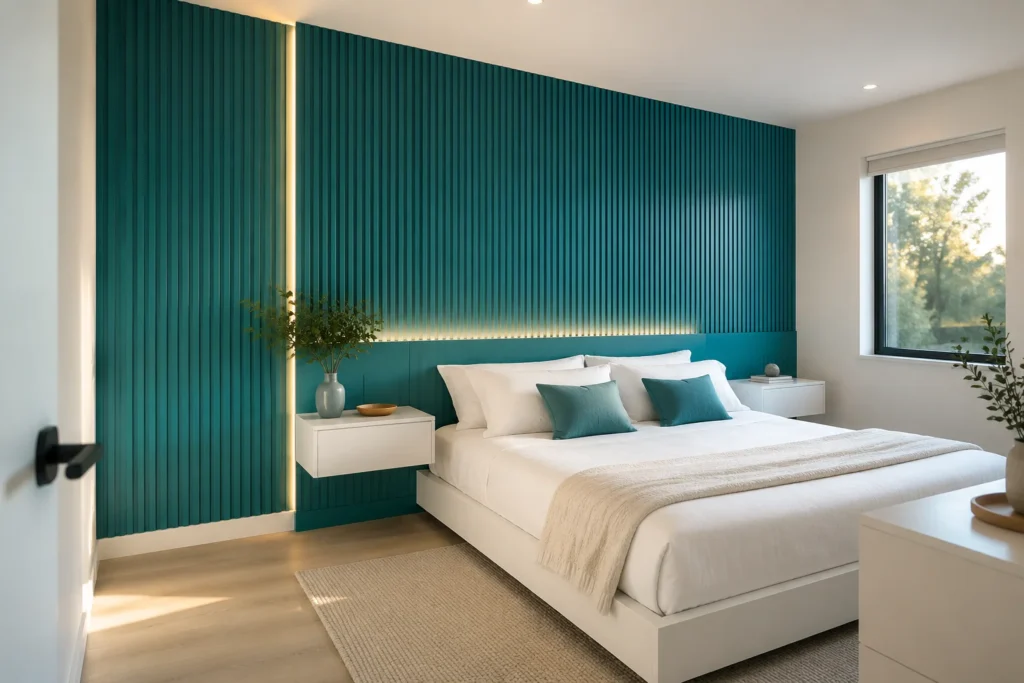
An accent wall can give a Turquoise and White Bedroom Design depth, personality, and a strong visual center.
The featured room demonstrates this approach through a dramatic turquoise wall positioned directly behind the bed.
Instead of using flat paint alone, the wall features narrow vertical panels with deep, evenly spaced grooves.
Therefore, the surface gains texture, rhythm, and a sophisticated architectural quality without requiring additional artwork.
The rich turquoise shade contrasts beautifully with the white bed, bedding, furniture, ceiling, and surrounding walls.
Meanwhile, warm concealed lighting highlights the wall’s texture and gives the bedroom a comfortable evening glow.
Choose the Best Wall for Your Feature
The wall behind the bed usually provides the strongest location for an accent treatment.
It naturally attracts attention because the bed already serves as the bedroom’s main furniture piece.
Moreover, placing color behind the headboard helps frame the sleeping area and establish a clear focal point.
This arrangement also creates balance without spreading a strong color across every wall.
However, you should inspect the room before choosing the final location.
Look for a wall without several doors, windows, switches, or awkward architectural interruptions.
A wide, uninterrupted surface usually produces the cleanest result.
Additionally, the wall should remain visible when someone enters the bedroom.
In the featured image, the accent wall extends from the floor toward the ceiling.
As a result, it makes the room appear taller and gives the bed greater visual importance.
The window remains on a separate white wall, which prevents turquoise from overpowering the natural light.
Consequently, the bedroom still feels bright, open, and comfortable throughout the day.
Add Texture With Vertical Wall Panels
Vertical wall panels offer more character than a smooth painted surface.
Their narrow lines guide the eyes upward and visually increase the room’s height.
Furthermore, the repeated pattern adds movement without introducing complicated prints or unnecessary decoration.
The effect feels modern, organized, and suitable for a peaceful sleeping environment.
You can create a similar appearance using timber slats, fluted panels, decorative molding, or textured wall boards.
Nevertheless, every panel should have consistent spacing for a professional and carefully finished result.
Before installation, measure the complete wall and plan around sockets, switches, and bedside furniture.
Careful preparation reduces waste and prevents uneven cuts near visible edges.
Paint the panels in one consistent turquoise shade after properly preparing their surfaces.
Alternatively, factory-finished panels can provide a smoother appearance and require less work during installation.
Although deep turquoise creates drama, smaller bedrooms may benefit from a softer or slightly muted shade.
Larger, brighter bedrooms can usually support richer tones without feeling enclosed.
Use Concealed Lighting to Highlight the Wall
Warm concealed lighting gives this accent wall an elegant finishing touch.
A vertical light strip defines the wall’s edge, while horizontal lighting creates a gentle glow above the bed.
Because the light remains hidden, viewers notice the illuminated texture rather than exposed fittings.
This technique produces a clean, luxurious appearance and strengthens the wall’s architectural design.
Choose warm white lighting instead of harsh blue or extremely bright illumination.
Warm light softens deep turquoise and creates a more relaxing atmosphere before bedtime.
Additionally, install dimmable controls whenever possible.
Lower brightness supports evening relaxation, while stronger illumination can improve visibility during cleaning or room preparation.
Balance the Strong Color With White Elements
A dramatic wall needs quieter furnishings around it.
Therefore, the room uses a white platform bed, white bedding, floating cabinets, and soft neutral textiles.
The two turquoise cushions repeat the wall color without creating visual clutter.
Meanwhile, the cream throw and textured rug introduce warmth between the cool turquoise and bright white surfaces.
Floating bedside cabinets also keep the floor visible and make the room feel less crowded.
Their simple shape allows the detailed wall to remain the primary attraction.
Natural greenery adds another gentle color, while light wooden flooring prevents the palette from feeling too cold.
Consequently, every supporting feature strengthens the design without competing for attention.
A successful accent wall should enhance the complete bedroom rather than dominate every feature.
In this Turquoise and White Bedroom Design, texture, proportion, lighting, and restraint work together beautifully.
By selecting the correct wall and balancing its color carefully, you can create an impressive yet restful bedroom.
Most importantly, the finished space should reflect your style while remaining comfortable for daily living.

Selecting the Right Bed for a Turquoise and White Bedroom Design
The bed determines comfort, movement, and visual balance within any Turquoise and White Bedroom Design.
In the featured room, a white canopy frame surrounds a beautifully upholstered bed with a curved turquoise headboard.
This strong combination makes the bed feel impressive without making the bedroom appear heavy.
Meanwhile, white bedding, pale flooring, and simple walls maintain a bright and peaceful atmosphere.
The slim canopy posts also draw attention upward and emphasize the room’s generous ceiling height.
Therefore, the bed becomes an architectural feature instead of functioning as ordinary bedroom furniture.
Measure the Bedroom Before Choosing a Bed
Begin by measuring the complete room, including doors, windows, wardrobes, and existing furniture.
Accurate measurements help you choose a bed that leaves enough comfortable walking space.
Ideally, adults should move easily around both sides and the foot of the bed.
However, smaller bedrooms may require narrower bedside tables or a bed without an extended frame.
The featured king-sized bed suits this spacious room because generous floor space remains visible.
Additionally, the open canopy structure appears lighter than a solid wooden frame with thick posts.
Before purchasing, mark the proposed bed dimensions on the floor using removable tape.
This simple step shows how much space the furniture will occupy.
Furthermore, measure the mattress height, headboard width, and canopy clearance separately.
A tall bed may look uncomfortable beneath a low ceiling or close to a ceiling fan.
Choose a Bed Style That Supports the Color Scheme
The featured bed combines three carefully selected elements: a white base, turquoise upholstery, and a slim white canopy.
Together, these features connect the furniture with the room’s complete color palette.
The curved turquoise headboard provides softness against the straight lines of the canopy frame.
Moreover, its velvet texture introduces warmth and prevents the modern structure from feeling too severe.
A turquoise headboard can serve as the main color feature in a mostly white bedroom.
Consequently, you may use fewer colorful accessories and still achieve a complete, coordinated appearance.
For a smaller space, choose a low-profile white bed with a compact upholstered headboard.
Conversely, a larger bedroom can support a canopy, sleigh bed, or tall statement headboard.
Avoid selecting an oversized frame simply because the room can contain it.
Instead, consider walking space, bedside storage, window access, and comfortable daily movement.
Prioritize Comfort and Practical Construction
Appearance matters, but the bed must also provide dependable support and everyday comfort.
Therefore, inspect the frame, joints, center supports, slats, and maximum recommended mattress weight.
A strong frame should remain stable when you sit, turn, or change sleeping positions.
Additionally, canopy posts must connect securely without visible leaning or unnecessary movement.
Choose an upholstered headboard with durable, easy-care fabric whenever possible.
Velvet looks luxurious, although performance fabric may suit homes with children, pets, or frequent use.
The white upholstered base in this image creates softness while hiding the mattress support.
However, light fabric requires regular cleaning to maintain its fresh appearance.
Also, select a mattress according to your preferred firmness, sleeping position, and support requirements.
The most attractive frame cannot compensate for an uncomfortable or unsuitable mattress.
Coordinate Bedding and Nearby Furniture
White sheets and pillowcases keep the large bed looking clean, airy, and welcoming.
Meanwhile, turquoise quilts and cushions connect the bedding with the curved headboard.
The layered textiles use several related shades instead of repeating one identical turquoise.
As a result, the bed feels thoughtfully styled rather than overly matched.
A warm wooden nightstand introduces natural contrast beside the cool turquoise and white surfaces.
Likewise, the ivory rug softens the floor and defines the sleeping area.
The single sculptural pendant provides practical bedside light without crowding the furniture.
Furthermore, its rounded shape complements the gentle curve of the upholstered headboard.
Artwork and indoor greenery complete the room without competing with the canopy structure.
Therefore, the bed remains the clear focal point from every visible angle.
Find the Right Balance Between Style and Scale
The best bed should fit your room, support restful sleep, and reflect your preferred decorating style.
It should also leave sufficient space for storage, movement, lighting, and nearby furniture.
In this Turquoise and White Bedroom Design, the canopy frame adds height while the turquoise headboard supplies color and comfort.
Careful measurements and balanced materials make the entire bedroom feel elegant, practical, and genuinely inviting.

Styling the Bedding in a Turquoise and White Bedroom Design
Well-chosen bedding can transform the appearance and comfort of a Turquoise and White Bedroom Design.
The featured bedroom uses carefully layered textiles to create a welcoming bed without making the room feel overdecorated.
Crisp white bedding forms the foundation, while turquoise pieces introduce color at different heights.
The result feels fresh, balanced, and suitable for a peaceful modern bedroom.
The bed remains the room’s main feature, although the surrounding furniture completes the overall arrangement.
Wooden nightstands, a patterned rug, artwork, greenery, and a turquoise chair support the bedding beautifully.
Begin With Comfortable White Bedding
Start with soft white sheets because they provide a clean background for every turquoise layer.
White bedding also reflects natural light and helps the sleeping area appear larger.
Choose breathable cotton, linen, or a comfortable blended fabric for everyday use.
These materials feel pleasant, wash easily, and work during several seasons.
A white duvet creates the largest neutral surface across the bed.
Its slightly relaxed texture prevents the arrangement from looking stiff or excessively formal.
The featured bed also includes several large white pillows placed against the wooden headboard.
They add height, comfort, and a soft background for smaller decorative cushions.
For a polished appearance, select whites with similar undertones.
Bright white and warm cream can clash when their differences appear too strong.
Layer Turquoise Textiles With Different Depths
The pale turquoise quilt covers the lower section of the bed and introduces gentle color.
Its stitched surface adds texture while keeping the palette calm and visually comfortable.
A deeper turquoise throw rests casually across one corner.
This darker shade adds contrast and prevents the lighter quilt from blending into the white duvet.
The throw’s loose placement makes the room feel lived-in and relaxed.
However, it still appears deliberate because its color matches nearby cushions and furniture.
Use two or three turquoise shades rather than repeating one identical tone.
Pale aqua, medium turquoise, and deep teal can create natural visual movement.
Nevertheless, keep each shade within the same general color family.
Too many unrelated blue-green tones may make the bedding appear confused rather than layered.
Arrange Pillows Without Creating Clutter
The pillow arrangement in this bedroom looks full but remains practical.
Large white pillows stand at the back, followed by turquoise square cushions.
A patterned lumbar cushion sits at the front and connects several colors together.
Its white-and-turquoise design adds detail without dominating the complete bed.
Begin with sleeping pillows, then add two decorative cushions and one smaller accent pillow.
This arrangement usually provides enough depth for a standard double or king bed.
However, smaller beds may need fewer pillows to maintain comfortable proportions.
Too many cushions can reduce useful space and make daily styling inconvenient.
Choose removable cushion covers whenever possible.
They simplify cleaning and allow you to update the bedroom without replacing every insert.
Coordinate the Bed With the Complete Room
Bedding should connect naturally with the room instead of appearing as a separate decoration.
Here, the turquoise chair repeats the deeper tone used on the cushions and throw.
The area rug combines turquoise with a soft neutral foundation.
Therefore, it visually links the bed with the surrounding floor and furniture.
Artwork above the headboard carries similar coastal shades without copying the bedding pattern.
Meanwhile, natural wooden furniture adds warmth beside the cool color palette.
Plants introduce fresh green tones that complement turquoise surprisingly well.
They also soften straight furniture lines and bring natural character into the room.
The white dresser balances the white bedding across the opposite side.
As a result, turquoise remains an accent color rather than covering every available surface.
Small Yellow Living Rooms Ideas often integrate multifunctional furniture, such as ottomans with hidden storage or sleek, space-saving shelving units.
Adjust the Layers for Each Season
During summer, use lightweight cotton sheets, a breathable coverlet, and a thin turquoise throw.
These materials keep the bed visually fresh without adding unnecessary warmth.
During winter, replace lighter pieces with a quilted coverlet, velvet cushions, and a heavier knitted throw.
You can also introduce cream textiles for a warmer seasonal appearance.
Wash bedding according to its care label, especially when several fabrics require different treatments.
Proper care protects the colors and preserves each material’s original texture.
Rotate decorative cushions occasionally to prevent uneven fading near sunny windows.
Likewise, store seasonal bedding in clean, breathable bags rather than sealed plastic containers.
Thoughtful layering gives a Turquoise and White Bedroom Design comfort, depth, and an inviting personality.
By combining practical fabrics, related shades, and restrained patterns, you can create a stylish bed for every season.

Choosing Curtains for a Bright Turquoise and White Bedroom Design
Curtains strongly influence the brightness, privacy, and comfort of a Turquoise and White Bedroom Design.
The featured bedroom uses layered window treatments to control sunlight while preserving its open, refreshing atmosphere.
White sheer curtains cover the expansive corner windows and gently filter strong daylight.
Meanwhile, solid turquoise panels frame the windows and add confident color around the room’s outer edges.
This combination feels practical because each curtain layer performs a different task.
The sheers soften glare, while the heavier panels provide privacy and stronger light control.
Combine Sheer and Solid Curtain Layers
Layered curtains offer greater flexibility than one fabric used alone.
During daytime, white sheers welcome sunlight while reducing direct brightness inside the bedroom.
The translucent material also creates privacy without completely blocking the outdoor view.
Therefore, the room remains connected with the surrounding landscape and distant coastal scenery.
During evening hours, the turquoise panels can close across the windows.
Their thicker fabric creates privacy and makes the sleeping area feel more secure.
Layering also improves visual depth because the two materials move differently.
Soft sheers appear light and flowing, while linen panels add structure and richer color.
Choose sheer fabric with enough fullness to form gentle, regular folds.
Flat sheers may look unfinished and provide less effective privacy during bright daylight.
For the outer panels, consider linen, cotton, velvet, or a quality blended fabric.
Each material creates a different finish, weight, and level of light protection.
Select a Turquoise Shade That Complements the Room
The turquoise curtains in this bedroom create a clear frame around the white windows.
Their medium shade adds energy without making the bright interior feel dark.
They also repeat the narrow turquoise border on the white bedding.
Additionally, decorative bowls and ceramics carry similar tones across nearby furniture.
When choosing curtain fabric, compare it with the bedding, rugs, paint, and upholstered pieces.
Colors often appear different under showroom lights and natural sunlight.
Take a fabric sample home before ordering complete panels.
Then, examine the material during morning, afternoon, and evening lighting conditions.
A pale turquoise works well in smaller bedrooms because it maintains an airy appearance.
However, deeper turquoise can create stronger contrast inside spacious, sun-filled rooms.
Avoid matching every turquoise surface exactly.
Slight variations usually produce a softer and more natural result than one repeated shade.
Measure Curtain Width and Length Carefully
Correct measurements make ordinary curtains look professionally installed.
Begin by measuring the complete window width, including any surrounding frames or corner sections.
For generous folds, the combined curtain width should exceed the track width.
Most fabrics need approximately one-and-a-half to two times the measured width.
Floor-length panels make walls appear taller and create an elegant continuous line.
In this image, the curtains begin near the ceiling and finish at floor level.
This installation also suits the large windows because it emphasizes their height.
Furthermore, a ceiling-mounted track keeps the overall appearance clean and modern.
Measure from the proposed track position rather than the top of the window frame.
Otherwise, the finished panels may hang too short or gather excessively on the floor.
For corner windows, plan each track section carefully and confirm how the curtains will open.
Panels should stack neatly without covering too much glass.
Balance Daylight, Privacy, and Sleep
A bright bedroom needs sunlight during the day but may require stronger darkness at night.
Sheer curtains alone cannot provide complete privacy or effective sleeping conditions.
Therefore, consider adding blackout lining behind the turquoise panels.
Quality lining can reduce light, protect fabric colors, and improve temperature control.
Blackout curtains may also help rooms facing strong streetlights or early morning sunshine.
However, their extra weight requires a secure ceiling track or curtain rod.
If the bedroom becomes hot during summer, choose thermal lining or UV-resistant fabric.
These options can reduce heat gain and protect furniture from fading.
Keep the white sheers clean because dust becomes visible under direct sunlight.
Follow the manufacturer’s washing instructions to prevent shrinking or damaged folds.
Vacuum heavier panels gently with a soft upholstery attachment.
Regular care preserves their color and keeps the entire window treatment looking fresh.
Create a Light and Peaceful Finish
The featured curtains frame the corner windows without competing with the simple white bed and curved chair.
Their strong vertical folds also make the ceiling appear higher.
White surfaces distribute daylight, while turquoise panels give the spacious room clear definition.
As a result, the window treatment feels decorative, functional, and beautifully balanced.
Well-chosen curtains can complete a Turquoise and White Bedroom Design while improving privacy, comfort, and light control.
By layering suitable fabrics and measuring carefully, you can create a bright bedroom that remains restful throughout the day.

Adding Gold Accents to a Turquoise and White Bedroom Design
Gold accents can add warmth, elegance, and visual depth to a Turquoise and White Bedroom Design.
The featured bedroom demonstrates how carefully placed metallic details can enrich a cool palette without dominating it.
Turquoise creates the room’s main color statement, while white keeps every surface bright and balanced.
Meanwhile, gold appears through lighting, furniture, hardware, frames, and smaller decorative features.
This restrained approach gives the room a luxurious finish without making it feel excessively formal.
Each gold detail attracts attention, yet every piece remains connected with the complete interior.
Choose One Consistent Gold Finish
Gold comes in polished, brushed, antique, satin, and champagne finishes.
Therefore, selecting one main finish creates a cleaner and more coordinated appearance.
The featured room mainly uses a warm brushed-gold tone with a soft reflective surface.
This finish complements rich turquoise velvet and crisp white bedding particularly well.
Highly polished gold can look glamorous, although it reflects stronger highlights and requires frequent cleaning.
Brushed gold usually feels softer and hides fingerprints more effectively.
Before purchasing fixtures, compare samples beside your turquoise fabrics and white paint.
Some gold finishes contain yellow undertones, while others appear warmer, darker, or slightly bronze.
You do not need every metal piece to match perfectly.
However, closely related finishes should share enough warmth to appear intentionally selected.
Create a Statement With Gold Lighting
The sculptural chandelier immediately draws attention toward the center of the ceiling.
Its layered gold form introduces movement and creates a refined focal point above the bed.
Two slim wall sconces repeat the same warm finish beside the turquoise headboard.
Additionally, their vertical shape emphasizes the height of the upholstered panels.
Wall-mounted lights also keep bedside surfaces clear for flowers, books, or personal items.
Their warm illumination softens the cool turquoise and supports a relaxing evening atmosphere.
Choose fixtures that match the room’s size and ceiling height.
An oversized chandelier can overwhelm a compact bedroom, while a small pendant may appear visually weak.
Install dimmable bulbs whenever possible.
Lower brightness creates a restful mood, while stronger light supports dressing, cleaning, and other practical activities.
Repeat Gold Through Furniture and Hardware
The white bedside table includes slim gold framing and matching drawer handles.
These details add definition while allowing the furniture to remain light and understated.
The upholstered bench also features narrow gold legs that connect beautifully with the bedside furniture.
Consequently, both pieces appear related without looking like an identical furniture set.
Across the room, the turquoise dresser uses small gold handles, legs, and edge details.
This combination turns practical storage into another coordinated design feature.
Replacing basic knobs with quality gold hardware offers an affordable update.
However, measure existing screw spacing before ordering handles for drawers or cabinet doors.
Small gold feet beneath the bed add another subtle connection.
Their limited size prevents the metallic finish from competing with the turquoise upholstered frame.
Use Mirrors and Frames to Distribute Gold
A tall oval mirror adds height and reflects natural light across the bedroom.
Its slim gold frame introduces brightness without creating a heavy decorative border.
The small framed artwork near the window repeats this metallic detail on another wall.
Therefore, gold feels distributed throughout the room instead of concentrated around the bed.
When arranging metallic accessories, consider the entire space rather than decorating one isolated corner.
Repetition helps the eye travel smoothly between furniture, lighting, artwork, and architectural features.
However, avoid filling every surface with gold objects.
Too much shine can weaken the peaceful quality of turquoise and white.
One mirror, a few frames, and selected hardware usually provide enough repetition.
White flowers, greenery, and neutral ceramics can fill the remaining decorative spaces.
Balance Gold With Soft Textures
The velvet turquoise headboard and quilt give the metallic accents a rich background.
Meanwhile, white bedding and an ivory rug soften the room’s stronger colors and reflective finishes.
The cream bench introduces another quiet texture between the turquoise bed and patterned carpet.
Its pale upholstery also prevents the gold legs from appearing too prominent.
Turquoise cushions with delicate gold patterns create a smaller connection between textiles and metal.
A single champagne-colored accent pillow adds warmth without disrupting the color scheme.
Natural greenery also balances polished finishes with organic shapes.
As a result, the bedroom feels comfortable and welcoming rather than overly decorated.
Keep the Final Look Elegant and Controlled
Gold works best when it highlights important features instead of covering large surfaces.
Begin with lighting or hardware, then assess the room before adding more.
In this Turquoise and White Bedroom Design, gold connects the chandelier, sconces, furniture, mirror, and decorative frames.
Careful repetition creates luxury, while restrained placement preserves the calm and refreshing character of the bedroom.

Selecting Furniture for a Turquoise and White Bedroom Design
Well-selected furniture brings comfort, storage, and visual balance to a Turquoise and White Bedroom Design.
The featured room combines natural wood, white storage, and turquoise pieces without making the spacious interior feel crowded.
Every item serves a practical purpose while supporting the calm color palette.
Meanwhile, generous walking areas keep the arrangement comfortable and easy to use.
The wooden spindle bed creates a warm focal point against the pale turquoise mural.
Turquoise nightstands, a lounge chair, and an ottoman distribute color naturally across the bedroom.
Start With the Bed as the Main Furniture Piece
The bed usually occupies the most space, so choose its size before buying other furniture.
Measure the room carefully and leave comfortable pathways around both sides.
The featured wooden bed includes an open spindle headboard and matching footboard.
Its slim construction provides character without creating a heavy visual barrier.
Natural wood also warms the cool turquoise and white palette.
Therefore, the bedroom feels comfortable, balanced, and connected with the surrounding natural elements.
A large rug sits beneath the bed and defines the sleeping zone.
However, enough flooring remains visible around its edges, which preserves the room’s open appearance.
Before purchasing a similar bed, inspect the frame, slats, joints, and center support.
Strong construction improves mattress stability and supports comfortable long-term use.
Choose Practical Bedside Furniture
The turquoise bedside tables add useful storage while introducing color beside the wooden bed.
Their open lower shelves keep books and everyday items within easy reach.
Compact nightstands work well because they provide function without blocking movement.
Additionally, their height aligns comfortably with the top of the mattress.
When selecting bedside furniture, consider drawer space, surface area, and access to power sockets.
You may need room for lighting, devices, water, glasses, or personal belongings.
Matching nightstands create symmetry, although coordinated pieces can also look attractive.
Keep their proportions similar so one side does not appear visually heavier.
If your room feels narrow, consider floating bedside shelves or slim tables.
These alternatives save floor space and make cleaning easier.
Add Comfortable Seating Without Blocking Movement
The turquoise lounge chair and matching ottoman create a peaceful reading corner beside the tall window.
Natural light makes this position suitable for reading, relaxing, or enjoying morning coffee.
The chair’s rounded shape softens the bed’s straight wooden lines.
Meanwhile, its rich upholstery strengthens the color connection with the bedside tables and bedding.
Allow enough space between the chair, ottoman, and nearby storage unit.
Crowded seating can restrict movement and make an otherwise spacious bedroom feel uncomfortable.
Choose upholstery that feels pleasant but remains easy to maintain.
Performance fabric can resist stains, while removable covers simplify regular cleaning.
A smaller bedroom may only need one compact accent chair.
Alternatively, a narrow bench can provide seating without requiring the depth of a lounge chair.
Plan Storage Around Daily Needs
The long floating white dresser provides generous storage while preserving visible floor space.
Its clean, handle-free design blends quietly with the white wall.
Floating furniture often makes rooms appear lighter and more modern.
Moreover, the open floor beneath it simplifies cleaning and reduces visual clutter.
The tall open storage unit combines hanging space, shelves, folded linens, and turquoise drawers.
This arrangement keeps frequently used items organized and clearly visible.
However, open shelves require regular tidying because clutter remains exposed.
Use baskets, trays, or matching boxes to organize smaller objects neatly.
The low wooden cabinet on the right adds another practical surface and balances the wooden bed.
It can store blankets, shoes, books, or seasonal bedroom accessories.
Mix Finishes Without Losing Coordination
A complete furniture set is not always necessary for an attractive bedroom.
Instead, repeat selected colors, materials, and shapes across different pieces.
In this room, natural wood appears on the bed, open shelving, and low cabinet.
White appears on the floating dresser, walls, bedding, and lamps.
Turquoise connects the nightstands, chair, ottoman, linens, mural, and artwork.
Consequently, every furniture piece feels related despite having a different function.
Limit the main material palette to two or three finishes.
Too many unrelated woods, metals, and painted colors may weaken the room’s calm character.
Create a Comfortable and Balanced Layout
Always arrange large furniture before placing accessories.
Start with the bed, then position storage, seating, bedside tables, and lighting around it.
In this Turquoise and White Bedroom Design, furniture supports both comfort and visual flow.
Thoughtful proportions, coordinated finishes, and practical storage create a bedroom that feels spacious, organized, and welcoming.

Improving Lighting in a Turquoise and White Bedroom Design
Thoughtful lighting can completely change the comfort and appearance of a Turquoise and White Bedroom Design.
The featured bedroom combines several light sources to create a warm, practical, and relaxing evening atmosphere.
Blue-hour light enters through the narrow upper window and provides a cool natural background.
Meanwhile, warm interior lighting softens the turquoise surfaces and makes the white furniture feel more welcoming.
The room does not depend on one powerful fixture.
Instead, ceiling, bedside, recessed, concealed, and decorative lights work together across different areas.
Begin With Soft Ambient Lighting
Ambient lighting provides general illumination and helps people move safely around the bedroom.
In this room, a sculptural white pendant hangs from the vaulted ceiling.
Its rounded shade spreads soft light instead of creating harsh glare.
Additionally, the elegant shape adds visual interest without competing with the turquoise features.
Choose a pendant that suits the room’s dimensions and ceiling height.
Large bedrooms can support wider fixtures, while compact rooms need lighter designs.
The bottom of the fixture should remain high enough for safe movement.
However, excessively high placement may reduce its decorative impact and useful illumination.
Warm white bulbs usually work best in bedrooms because they create a restful atmosphere.
Bulbs around 2700K often produce a comfortable golden-white appearance.
Add Adjustable Bedside Task Lighting
The adjustable wall lamps provide focused light for reading, using devices, or preparing for sleep.
Their long arms direct illumination exactly where each person needs it.
Wall-mounted lamps also keep the floating bedside tables clear.
Therefore, books, glasses, water, and personal items remain easy to organize.
Place each reading light where it illuminates the page without shining directly into someone’s eyes.
Test the height while sitting naturally against the headboard.
Separate switches allow each sleeper to control their own lamp.
Moreover, dimmable settings provide brighter reading light and softer illumination before bedtime.
The white shades blend with the walls and bedding, while small brass details introduce gentle warmth.
This restrained finish supports the room without becoming overly decorative.
Use Concealed Lighting for Depth
A hidden light strip follows the curved wall behind the upholstered headboard.
This glow emphasizes the architecture and separates the bed from the background.
Concealed lighting works best when viewers see the effect rather than the individual bulbs.
Consequently, the room appears polished, modern, and thoughtfully designed.
The illuminated line also highlights the headboard’s pale turquoise color.
However, its low brightness prevents the feature from disturbing the bedroom’s peaceful mood.
LED strips should include a proper diffuser to prevent visible dots.
Additionally, choose reliable drivers and allow access for future maintenance.
Always ask a qualified electrician to install concealed electrical lighting safely.
Good wiring matters more than decorative appearance, especially around beds and upholstered surfaces.
Create a Gentle Under-Bed Glow
Warm light beneath the bed makes the furniture appear lighter and easier to navigate around.
It also provides subtle guidance during nighttime movement.
The glow spreads across the wooden floor and rug without producing strong shadows.
Therefore, it supports safety while preserving a restful atmosphere.
Install the strip far enough beneath the frame to hide the light source.
Motion sensors can also provide automatic illumination without requiring the main ceiling light.
However, avoid excessive brightness or cool blue strips below the bed.
Strong lighting may appear distracting and interfere with the room’s relaxing character.
Highlight Artwork and Seating Areas
Small recessed spotlights illuminate the turquoise wall and artwork near the loveseat.
These lights create another visual layer beyond the sleeping area.
Directed lighting reveals texture, color, and framed details more clearly.
Meanwhile, the nearby table lamp provides softer illumination beside the dresser.
Avoid aiming spotlights directly toward the bed or reflective surfaces.
Instead, position them to wash walls gently and reduce uncomfortable glare.
A balanced lighting plan should include ambient, task, and accent sources.
Decorative lighting can then complete the atmosphere without replacing practical fixtures.
Install Flexible Lighting Controls
Use separate switches for ceiling, bedside, concealed, and accent lighting.
This arrangement allows you to create different moods without illuminating the entire room.
Dimmers offer additional control during reading, dressing, relaxing, or cleaning.
Smart bulbs can also support schedules, although ordinary dimmers often remain simpler.
In this Turquoise and White Bedroom Design, layered lighting adds warmth, depth, and everyday flexibility.
By combining practical fixtures with subtle highlights, you can create a bedroom that feels inviting throughout every evening.
Choosing Rugs and Accessories for a Turquoise and White Bedroom Design
Rugs and accessories add comfort, personality, and visual unity to a Turquoise and White Bedroom Design.
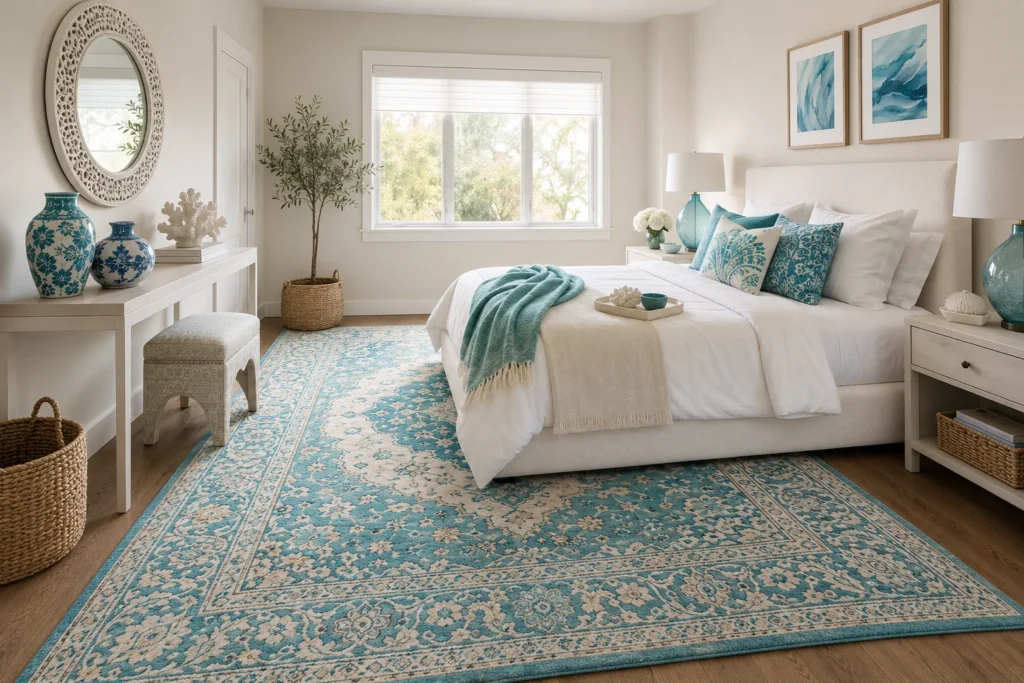
The featured bedroom uses a large patterned rug and coordinated decorative pieces to connect every part of the room.
The turquoise-and-ivory rug immediately attracts attention and defines the complete sleeping area.
Meanwhile, vases, lamps, cushions, artwork, baskets, and a mirror repeat the palette at different heights.
Although the room contains several decorative objects, it still feels organized and peaceful.
Each accessory supports the color scheme rather than competing with the bed or rug.
Select a Rug With the Correct Size
The rug should feel connected with the bed instead of floating separately within the room.
In this image, it extends well beyond both sides and the foot.
This generous placement provides a soft surface whenever someone leaves the bed.
Additionally, the visible border creates a balanced frame around the largest furniture piece.
A rug that appears too small can make the bed look oversized.
Therefore, measure the bed, bedside tables, and available floor before selecting a size.
For a larger bed, place the rug beneath at least two-thirds of its length.
Smaller bedrooms can position a runner along each side when one large rug feels impractical.
Use removable tape to mark the proposed dimensions across the floor.
This simple method helps you understand the rug’s scale before making a purchase.
Choose Pattern and Color Carefully
The featured rug combines turquoise, ivory, and soft grey within a detailed traditional pattern.
Its faded finish prevents the strong design from appearing too formal.
Because the walls and bedding remain mostly white, the rug can comfortably carry more pattern.
However, heavily patterned walls may require a simpler floor covering.
Choose turquoise tones that relate to the bedding, lamps, or cushions.
Exact matching is unnecessary, although the shades should share similar blue-green undertones.
An ivory background keeps the rug bright and connects it with the upholstered bed.
Meanwhile, deeper turquoise borders give the large floor area clear definition.
Consider how the pattern will appear beneath furniture.
Large motifs often suit spacious rooms, while smaller repeating designs work well in compact bedrooms.
Consider Comfort and Practical Materials
Wool rugs feel warm, durable, and comfortable beneath bare feet.
However, they may require professional cleaning and a larger initial budget.
Synthetic rugs often cost less and resist everyday stains more easily.
Therefore, they may suit busy homes, children, or households with pets.
A low or medium pile offers softness without creating difficult furniture movement.
Thick piles can feel luxurious but may trap more dust.
Place a suitable rug pad underneath to prevent sliding and protect the flooring.
It can also add cushioning and extend the rug’s useful life.
Vacuum regularly using settings recommended for the material.
Additionally, rotate the rug occasionally to reduce uneven fading and repeated wear.
Coordinate Accessories Without Creating Clutter
Turquoise-and-white ceramic vases decorate the slim console and introduce pattern above the rug.
Their varied shapes create interest while their shared colors maintain coordination.
A carved white mirror adds texture and reflects natural daylight across the room.
Consequently, the wall feels decorative without needing several unrelated objects.
The turquoise glass lamps repeat color on both sides of the bed.
Their transparent surfaces appear lighter than solid bases and preserve the airy atmosphere.
Patterned cushions connect the bed with the rug through related floral and geometric details.
Meanwhile, a soft turquoise throw introduces another comfortable textile layer.
Woven baskets provide useful storage and add natural warmth beside the cool palette.
They can hold spare blankets, cushions, books, or everyday bedroom items.
Arrange Decorative Pieces With Purpose
Group accessories in small collections instead of spreading single objects across every surface.
Three related pieces often look more intentional than many scattered decorations.
Vary the height and shape within each arrangement.
For example, pair a tall vase with books and one smaller sculptural object.
Leave some empty space around decorative groups.
These quiet areas help the eye rest and prevent carefully chosen accessories from appearing cluttered.
The two framed prints above the bed repeat turquoise without adding another strong pattern.
Their simple white backgrounds also connect with the bedding and walls.
Fresh flowers and greenery soften the decorative arrangement with natural shapes.
However, use plants selectively when several patterned accessories already occupy the room.
Build a Balanced Final Look
Choose the rug first when it carries the strongest pattern, then select smaller accessories from its colors.
This approach simplifies shopping and reduces mismatched decorative choices.
In this Turquoise and White Bedroom Design, the rug anchors the furniture while accessories create rhythm throughout the room.
Careful sizing, repeated colors, practical materials, and restrained styling produce a bedroom that feels welcoming and complete.

Adding Plants and Artwork to a Turquoise and White Bedroom Design
Plants and artwork can give a Turquoise and White Bedroom Design warmth, personality, and natural movement.
The featured bedroom combines carefully selected greenery with a coordinated gallery wall, creating a peaceful and welcoming interior.
The plants introduce fresh green tones that complement turquoise without competing against it.
Meanwhile, the artwork repeats aqua, white, green, and coastal shades throughout the spacious room.
Each decorative feature occupies a planned position instead of filling every available surface.
Therefore, the bedroom feels lively, balanced, and comfortable rather than crowded.
Choose Plants for the Available Light
Before buying indoor plants, examine how much natural light enters the bedroom.
The large glass door provides bright, indirect sunlight throughout much of the day.
A tall bird-of-paradise plant stands beside the window in a large white planter.
Its broad leaves fill the corner and connect the bedroom with the outdoor landscape.
This plant generally prefers bright light and enough room for future growth.
However, direct afternoon sunlight may require filtering in very hot climates.
A rubber plant beside the turquoise chair adds height on the opposite side.
Its dark, glossy leaves provide contrast against the pale walls and soft upholstery.
The trailing pothos rests on a high wall shelf and creates gentle downward movement.
Additionally, smaller plants decorate the bedside table and dresser without using much space.
Explore a myriad of pink bedroom ideas to infuse your space with warmth and sophistication.
Match Planters With the Bedroom Palette
White and pale turquoise planters repeat the room’s main colors while keeping attention on the foliage.
Their simple shapes also support the bedroom’s modern, uncluttered style.
Choose containers with proper drainage holes or use removable nursery pots inside decorative covers.
Good drainage protects roots and reduces the risk of excess moisture.
Place saucers beneath watered plants to protect wooden furniture and flooring.
Furthermore, avoid positioning damp containers directly against painted walls or valuable artwork.
Large plants need stable pots that will not tip easily.
Heavier ceramic planters provide support, although they may require protective pads underneath.
Vary planter heights to create a natural arrangement.
Floor pots, tabletop containers, and high shelves prevent greenery from gathering at one visual level.
Build a Coordinated Gallery Wall
The gallery wall combines five framed pieces in several sizes.
Botanical drawings, turquoise watercolors, and a coastal landscape create a consistent nature-inspired theme.
Different subjects keep the arrangement interesting, while the shared palette maintains visual harmony.
Thin white and pale wooden frames complement the room without appearing heavy.
Begin by arranging frames on the floor before placing them on the wall.
This approach helps you test spacing, balance, and overall dimensions safely.
Keep the gaps between frames reasonably consistent.
Uneven spacing can make a carefully selected collection appear accidental or poorly planned.
The largest abstract piece anchors the upper section, while the coastal landscape balances the lower arrangement.
Smaller botanical prints complete the remaining spaces without overcrowding the wall.
Position Artwork at a Comfortable Height
Artwork should relate to nearby furniture and remain comfortable to view.
In this bedroom, the gallery wall sits above the turquoise chair and open floor area.
The arrangement feels connected with the seating corner rather than floating too close to the ceiling.
Its width also suits the available wall space.
For artwork above furniture, leave enough separation to prevent visual crowding.
However, avoid creating such a large gap that both features appear unrelated.
Use secure hooks suited to the wall type and frame weight.
Additionally, check nearby electrical wiring before drilling into any surface.
Protect valuable prints from strong direct sunlight because colors may fade over time.
UV-filtering glass can provide additional protection in particularly bright bedrooms.
Balance Greenery With Other Room Features
The plants and artwork should enhance the bedroom rather than hide important furniture.
Here, greenery frames the bed, window, chair, and gallery wall naturally.
The white bed and round ivory rug provide quiet visual space between the decorative elements.
Meanwhile, turquoise cushions and a matching coverlet connect the bed with the artwork.
Natural wooden furniture also supports the botanical theme and warms the cool color scheme.
Consequently, the room feels organic without becoming rustic or overly tropical.
Avoid adding too many different plant varieties in one small room.
A few healthy plants usually look better than several crowded or struggling specimens.
Maintain a Fresh and Personal Finish
Dust leaves gently so they can receive light and maintain their natural appearance.
Water each plant according to its needs rather than following one fixed schedule.
Rotate pots occasionally to encourage even growth.
Likewise, inspect leaves regularly for dryness, pests, or signs of excessive watering.
Choose artwork that reflects your taste instead of copying a showroom exactly.
Personal photographs, travel prints, paintings, or botanical sketches can all support the palette.
In this Turquoise and White Bedroom Design, plants create freshness while artwork adds character and structure.
Thoughtful placement, suitable lighting, coordinated frames, and regular care produce a bedroom that feels expressive, restful, and beautifully complete.
Conclusion: Creating a Complete Turquoise and White Bedroom Design
A successful Turquoise and White Bedroom Design combines refreshing color, practical comfort, and carefully balanced decorative details.
White creates a bright foundation, while turquoise introduces calmness, character, and a gentle connection with nature.
Begin by selecting turquoise shades that complement the room’s size, daylight, and existing finishes.
Then, create a focal point through an accent wall, upholstered headboard, or beautifully styled bed.
However, keep enough white space around stronger features to maintain a peaceful atmosphere.
Furniture should support comfortable movement, useful storage, and the overall color palette.
Likewise, layered bedding can introduce several turquoise tones through quilts, cushions, throws, and subtle patterns.
Well-chosen curtains will control brightness and privacy while making windows appear taller and more elegant.
Gold accents can add warmth through lighting, mirrors, handles, frames, and furniture details.
Nevertheless, restrained placement produces a more sophisticated result than excessive metallic decoration.
Layered lighting also improves the bedroom through ambient, task, and accent illumination.
A correctly sized rug anchors the furniture and adds softness underfoot.
Meanwhile, coordinated accessories can repeat color without creating unnecessary clutter.
Plants bring natural freshness, while artwork gives the bedroom personality and completes empty wall spaces.
Most importantly, every design choice should suit your comfort, budget, room dimensions, and daily routine.
You do not need to introduce every idea at once.
Instead, begin with the main colors and gradually add furniture, textiles, lighting, and accessories.
With thoughtful planning, a Turquoise and White Bedroom Design can feel stylish, restful, and welcoming throughout every season.